

Weights Check
RUSTAM ISMAILOV · Sports
Independent analytics for this App Store listing. AppTracker is not affiliated with RUSTAM ISMAILOV.
Chart standing · US
What changed · US
Listing changes AppTracker has observed for this app in this storefront — new versions, price moves, rating shifts, and store copy.
A new icon. Steel cylinders can be entered from the numbers stamped on the shoulder: capacity, working pressure and the stamped mass. The app works out the cylinder's buoyancy from them. Every cylinder's mass is now entered without its valve: the stamped figure on steel, the maker's empty weight on aluminium. Changing the mass of an item picked from the list now changes its buoyancy only by what the added or missing material would. Before, the whole difference went into buoyancy, so a lighter item read more buoyant than it is and a heavier one less buoyant. Gear already edited that way is fixed in My gear when the app opens. Cylinders whose standard is not known now come first in the cylinder list.
Screenshots



About
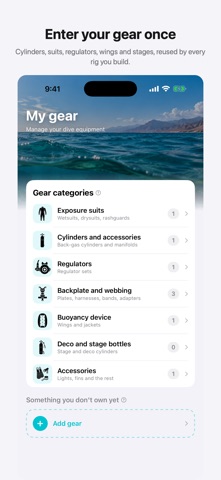
A diver's lead is not one number. It moves with the water, the suit, the cylinders and the year — and most divers carry it in their head, or work it out again badly at every new destination. Weights Check keeps the record instead: build a rig once from your own gear, record what you actually wore and how it went, and the next dive starts from evidence rather than memory. It is a library, not a calculator and not a verdict on your rig. The arithmetic exists to make the library worth keeping. YOUR GEAR, ENTERED ONCE Cylinders, suits, wings, backplates, regulators, lights and stages go in once, across the seven categories My gear keeps. Lead is not owned but fitted, so it belongs to a rig rather than to the library. Build a configuration by picking from that library, and the tenth rig takes less than the second. First launch builds a sample rig from three questions, to look at before you build your own. PLAY WITH A RIG BEFORE YOU DIVE IT Copy a configuration and change one thing: the suit, the water, single to doubles or sidemount, a stage added, the lead moved from belt to plate. Everything follows — pick a mounting and the hardware it implies is fitted with it — and the copy is yours to change until you dive it and record a check against it. THE BALANCE, DRAWN Every configuration opens on the balance, in two columns. On the left, the 3 m stop with 50 bar left in every bottle: one signed figure on a bar running sinks to floats, with the estimate's band on it. On the right, the same rig at depth: what it would take to swim up if the wing failed, and whether the wing you fitted has the lift. A tag says what the figures stand on — your own check and its date, a check borrowed from another rig, or a plan. THE RIG, ITEM BY ITEM Under the balance, the same dive itemised: every item of the rig, what it is worth at the stop and at depth, the gas in the back cylinders and in every stage, the totals with and without the lead you fitted, and one line of what to do about it. ESTIMATES UNTIL YOU CHECK, MEASUREMENTS AFTERWARDS Before you have recorded a weight check, a suit's buoyancy comes from a published-material estimate, your body from your weight, height and sex, and the answer prints as a range it says is an estimate. Record one real weight check — 3 m, 50 bar in every bottle, and the lead you finished the check with — and the range narrows around what your own rig actually did. Recording checks is what turns the estimates into your numbers; nothing else does. WHERE IT STOPS It does not replace the weight check you do in the water — that check is the authority, and the app exists to remember it, not to stand in for it. It is not a dive computer, it runs no decompression calculation, and it is not a substitute for training. Where it cannot answer, it says so rather than printing a number with a caution underneath: a stage bottle that has not said what size it is, what it is filled to or what is in it is refused outright and explained rather than guessed at. Above a load you set for yourself it warns. Below that load it shows you the signed number and nothing more. There is no verdict on a diver anywhere in this app. EVERYTHING ELSE • Weight positioning recorded — where the lead sits, and what is ditchable • Every check kept, newest first, with what you entered on each one • Metric and imperial, switched app-wide, converted at the point of display • A dived-but-unrecorded rig waits at the top of the library • Deleted gear waits in Settings until you clear it out yourself — nothing empties itself • Equipment figures come from a maintained, sourced reference table • No account, no ads, no analytics, no network access of any kind, and works with no signal at all Your training and your own weight check in the water decide what you dive. Weights Check keeps the record and does the arithmetic beforehand.
What's new · 1.8
A new icon. Steel cylinders can be entered from the numbers stamped on the shoulder: capacity, working pressure and the stamped mass. The app works out the cylinder's buoyancy from them. Every cylinder's mass is now entered without its valve: the stamped figure on steel, the maker's empty weight on aluminium. Changing the mass of an item picked from the list now changes its buoyancy only by what the added or missing material would. Before, the whole difference went into buoyancy, so a lighter item read more buoyant than it is and a heavier one less buoyant. Gear already edited that way is fixed in My gear when the app opens. Cylinders whose standard is not known now come first in the cylinder list.
Details