

Ludo - Classic Aeroplane Chess
欢 饶 · Games
Independent analytics for this App Store listing. AppTracker is not affiliated with 欢 饶.
Chart standing · US
What changed · US
Listing changes AppTracker has observed for this app in this storefront — new versions, price moves, rating shifts, and store copy.
Screenshots

About
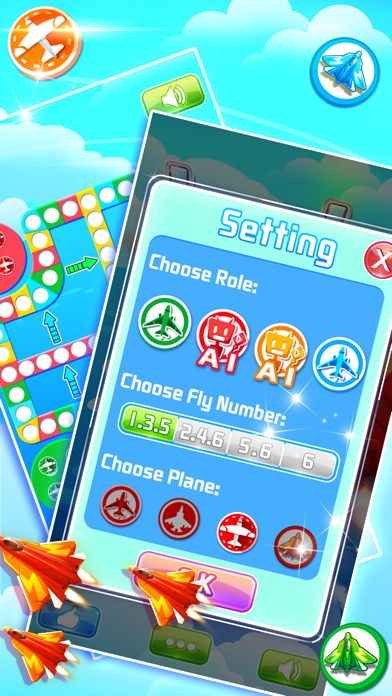
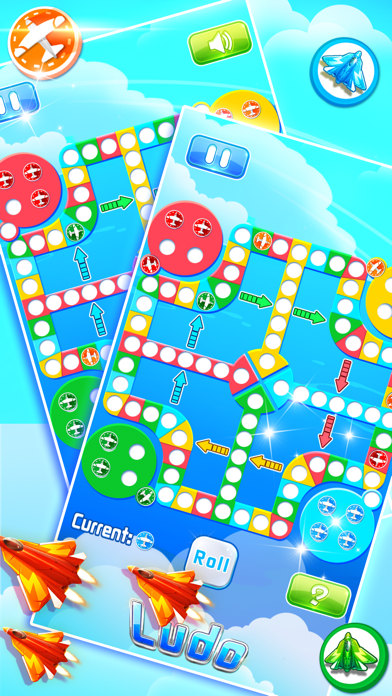
Each player rolls the die, the highest roller begins the game. The players alternate turns in a clockwise direction. To enter a token into play from its staging area to its starting square, a player must roll a 6. If the player has no tokens yet in play and does not roll a 6, the turn passes to the next player. Once a player has one or more tokens in play, he selects a token and moves it forward along the track the number of squares indicated by the die roll. Players must always move a token according to the die value rolled, and if no move is possible, pass their turn to the next player. When a player rolls a 6 he may choose to advance a token already in play, or alternatively, he may enter another staged token to its starting square. The rolling of a 6 earns the player an additional ("bonus") roll in that turn. If the additional roll results in a 6 again, the player earns an additional bonus roll. If the third roll is also a 6, the player may not move a token and the turn immediately passes to the next player. A player may not end his move on a square he already occupies. If the advance of a token ends on a square occupied by an opponent's token, the opponent token is returned to its owner's yard. The returned token may only be reentered into play when the owner again rolls a 6. Unlike Pachisi, there are no "safe" squares on the game track which protect a player's tokens from being returned. A player's home column squares are always safe, however, since no opponent may enter them.
What's new · 2.5.9
Fixed existing bugs
Details